
 By Joshua Ntow Odei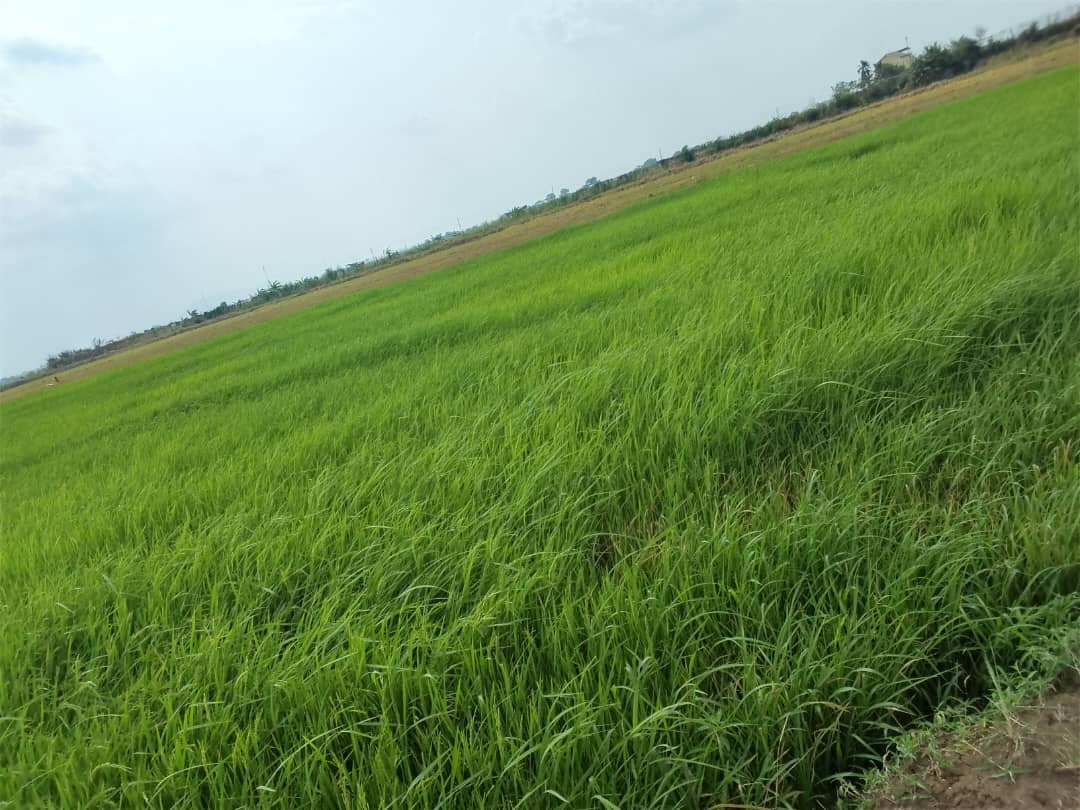
Introduction
Rice is one of the important staple foods in Ghana. It is eaten in almost every home, from plain rice with stew to jollof rice and waakye. Because of this high demand, rice farming is essential for food security and a profitable agricultural business when managed well.
In Ghana, rice is grown in areas such as Aveyime, Akuse, and Asutsuare, where the land and water conditions are suitable for large-scale production of rice.
There are two main types of rice farming:
Rain-fed rice farming
This depends mainly on rainfall. Farmers plant during the rainy season and rely on natural water supply. It is less expensive but riskier if the rainfall is low or inconsistent.
Irrigation rice farming
This uses controlled water systems, such as canals, pumps, or dams. It allows farming all year round and usually results in higher yields, but requires more capital and planning.
Rice grows best in clayey or loamy soils that can retain water. The soil should be fertile and slightly level to allow water to remain in the field. Rice needs standing water at certain growth stages, so the land must be able to retain moisture.
1. Land Preparation
Land preparation is one of the most important stages in rice farming. A well-prepared land determines how well the rice will grow.
First, the land is cleared of bushes and other unwanted vegetation. After clearing, the soil is plowed or tilled using a tractor or power tiller. This loosens the soil and buries the weeds.
Next, harrowing and crossing are performed. Harrowing helps break large soil clods into smaller particles and smoothen the land surface. Crossing means harrowing in different directions to level the field. In irrigation farming, leveling is important to ensure that water spreads evenly across the field.
Bunds (small embankments) can also be constructed around the field to hold water.
2. Broadcasting Seeds or Transplanting Seedlings
After preparing the land, planting was initiated. There are two common methods.
Broadcasting seeds
Seeds were scattered directly on the prepared land. This method is fast and requires less labor. However, the seeds may not grow evenly, and weeds may compete strongly with rice.
Transplanting seedlings
Here, seeds are first planted in nursery beds. After approximately 2–3 weeks, the seedlings are carefully uprooted and transplanted into the main field.
Transplanting allows for better spacing, stronger plant growth, and usually higher yields. However, this requires more labor and time.
3. Application of Fertilizer and pesticides
As rice grows, nutrients in the soil may be reduced. To ensure healthy growth, fertilizers are applied at the right time and in the right proportions.
Common fertilizers include:
NPK (Nitrogen, Phosphorus, Potassium) – Usually applied during early growth stages to support root and leaf development.
Urea – Applied later to promote strong stem and grain formation.
Applying too much fertilizer can damage crops, whereas too little can reduce yield.
Pesticides/fungicides are applied to prevent pests from destroying crops.
It is best to follow agricultural extension advice for the correct measurements.
4. Hand-Picking (Weeding)
Weeds grow along with rice and compete for nutrients, sunlight, and water resources. Some weeds cannot be removed with a cutlass or slasher without damaging rice plants.In such cases, hand-picking is performed carefully. Workers move through the field and remove the weeds by hand. Although labor-intensive, it helps protect rice and improves yield. Recent developments have introduced selective weedicides that destroy only the weeds and not the rice when sprayed.
5. Scaring Birds
When rice begins to mature and form grains, birds often invade farms to feed on them. If not controlled, they can cause serious damage.
Farmers protect their crops by:
Making scarecrows
Covering parts of the field with nets
Employing people to scare birds away
Using noise-making devices
Constant monitoring is necessary until the harvest.
6. Harvesting
When the rice grains turn golden brown and are fully matured, it is time to harvest them.
In irrigation farming, water is first drained from the field to facilitate harvesting. Harvesting can be performed manually using sickles or mechanically using harvesters.
The harvested rice stalks are gathered and packed into sacks for further processing.
7. Drying and Milling (Removing the hull and Chaff)
After harvesting, rice is dried under the sun to reduce its moisture content. Proper drying prevents spoilage and facilitates storage.
Once dried, rice is milled to remove the hull and outer covering. A wind-blowing or milling machine separates the chaff from the grains. This process produces clean rice that is ready for grading.
8. Grading and Bagging
After milling, rice is sorted and graded according to its size and quality. Broken grains were separated from the whole grains.
The rice is then bagged in well-labeled sacks and is ready for distribution.
9. Marketing or Selling
Finally, the rice is sent to the market for consumption. They can be sold to wholesalers, retailers, supermarkets, or directly to households. Some farmers also store rice in warehouses to sell it later when prices increase.
With proper planning, good farming practices, and effective marketing, rice farming can become a profitable and sustainable business in Ghana.
Starting a rice-farming business requires patience, capital, and hard work. However, with the right knowledge and commitment, it can provide a steady income while contributing to national food production.
 Linda Ayikale Adjei